Inflammatory Bowel Disease Management in Raipur
- Home
- Inflammatory Bowel disease Management
Professional Inflammatory Bowel Disease Care for Better Digestive Health
Inflammatory Bowel Disease Management in Raipur
Digestive problems that keep coming back can affect your food habits, work, sleep, and daily routine. Frequent diarrhoea, abdominal pain, blood in the stool, unexplained weight loss, or repeated bowel problems may sometimes need a detailed medical evaluation. Inflammatory Bowel Disease Management in Raipur can help patients understand the cause of ongoing intestinal inflammation and receive appropriate medical guidance.
At Dr Patel’s Gastro, Liver and Endoscopy Centre, patients can receive specialized gastroenterology consultation for inflammatory bowel conditions. Dr. Rootik Patel, M.B.B.S., M.D. (Medicine), D.M., provides gastroenterology care with a focus on understanding symptoms, reviewing medical history, and recommending suitable tests and treatment when required.
Inflammatory Bowel Disease mainly includes Crohn’s disease and Ulcerative Colitis. These conditions can have periods when symptoms become active, called flares, followed by periods when symptoms improve or disappear, called remission.
What Is Inflammatory Bowel Disease?
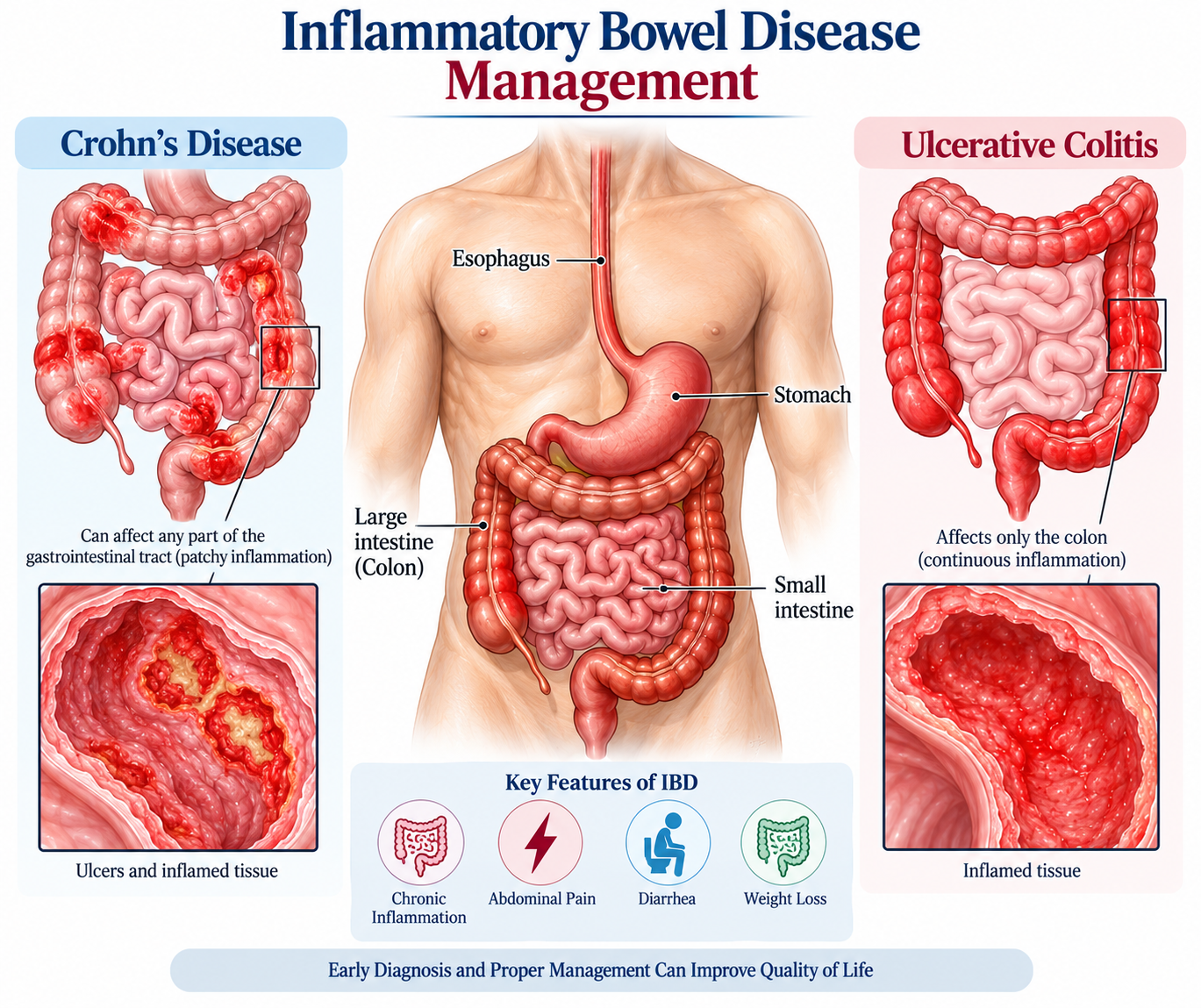
Inflammatory Bowel Disease, commonly called IBD, refers to a group of long-term diseases that cause inflammation in the digestive tract. The two main types are Crohn’s disease and Ulcerative Colitis. Crohn’s disease can affect different parts of the digestive tract, while Ulcerative Colitis mainly affects the inner lining of the large intestine and rectum. Both conditions can cause symptoms that come and go over time.Inflammatory Bowel Disease Management in Raipur is planned according to the type of IBD, the part of the digestive tract affected, the severity of inflammation, symptoms, test results, and the patient’s overall health.
What Are the Common Symptoms of IBD?
The symptoms of Inflammatory Bowel Disease can be different for each person. Some people may have mild symptoms, while others may experience more severe or repeated flare-ups.
Common symptoms may include:
- Frequent diarrhoea
- Abdominal pain or cramps
- Blood in the stool
- Urgent need to pass stool
- Unexplained weight loss
- Loss of appetite
- Tiredness or weakness
- Fever in some cases
- Nausea or vomiting
- Joint pain or other symptoms outside the digestive system
Crohn’s disease commonly causes diarrhoea, abdominal pain or cramping, and weight loss. Ulcerative Colitis may cause diarrhoea, rectal bleeding, abdominal cramps, urgency, and sometimes weight loss or fever.
What Causes Inflammatory Bowel Disease?
The exact cause of IBD is not completely known. Researchers believe that several factors may play a role.
These may include:
- Family history and genes
- Abnormal immune system reactions
- Changes in the gut microbiome
- Environmental factors
Having a family history of IBD can increase a person’s risk, but it does not mean that the person will definitely develop the disease.
Crohn’s Disease
Crohn’s disease is a type of Inflammatory Bowel Disease that can affect different parts of the digestive tract. It commonly affects the small intestine and the beginning of the large intestine, but it can occur anywhere from the mouth to the anus.
Symptoms may include:
- Diarrhoea
- Abdominal pain and cramping
- Weight loss
- Tiredness
- Fever
- Loss of appetite
- Nausea or vomiting
Symptoms can become worse during a flare and may improve during remission.
Crohn’s Disease Treatment in Raipur
Crohn’s Disease Treatment in Raipur is based on the location and severity of inflammation and the symptoms experienced by the patient.
Treatment may involve medicines that reduce inflammation or control the abnormal immune response. Some patients may require additional treatment for complications, while surgery may be considered in selected cases.
The main goals are to reduce inflammation, control symptoms, prevent flare-ups, and maintain remission.
Ulcerative Colitis
Ulcerative Colitis is another major type of IBD. It causes inflammation and ulcers in the inner lining of the large intestine and rectum.
Common symptoms may include:
- Diarrhoea
- Blood in the stool
- Rectal bleeding
- Abdominal cramps
- Urgent need to pass stool
- Mucus in the stool
- Tiredness
- Weight loss in some patients
Symptoms can become active during a flare and may improve during periods of remission.
Ulcerative Colitis Treatment in Raipur
Ulcerative Colitis Treatment in Raipur depends on how severe the inflammation is and how much of the large intestine is affected.
Doctors may use medicines to reduce inflammation and help achieve or maintain remission. In some patients with severe disease or complications, surgery may be considered.
Why Is IBD Management Important?
Inflammatory Bowel Disease is a long-term condition and may require regular monitoring. Symptoms can improve for some time and then return during a flare.
Proper management aims to:
- Reduce intestinal inflammation
- Control digestive symptoms
- Prevent frequent flare-ups
- Maintain remission
- Support good nutrition
- Monitor for complications
- Improve everyday quality of life
The treatment plan may change over time depending on symptoms, test results, disease activity, and response to treatment.
How Is Inflammatory Bowel Disease Diagnosed?
There is no single test that can diagnose every case of IBD. A gastroenterologist usually reviews the patient’s symptoms, medical history, family history, and physical examination before recommending appropriate tests.
Tests may include:
- Blood tests
- Stool tests
- Colonoscopy
- Flexible sigmoidoscopy
- Biopsy
- CT scan
- MRI
- Other endoscopic or imaging tests
Blood tests may help identify inflammation or anaemia. Stool tests can help look for inflammation and rule out certain infections. Endoscopy with biopsy can help doctors examine the intestine and confirm or assess IBD.
IBD Treatment in Raipur
IBD Treatment in Raipur is individualized because every patient can have a different disease pattern.
Depending on the condition, treatment may include medicines that reduce inflammation, medicines that modify the immune response, biologic therapies, or other appropriate medicines.
Treatment decisions may depend on:
- Type of IBD
- Location of inflammation
- Severity of symptoms
- Test results
- Previous treatments
- Other medical conditions
- Response to treatment
In some cases of Crohn’s disease or Ulcerative Colitis, surgery may be required to manage complications or disease that does not respond adequately to medicines.
Patients should not start, stop, or change IBD medicines without discussing it with their doctor.
Diet and Lifestyle With IBD
Food does not cause IBD, but certain foods may make digestive symptoms worse for some patients, especially during a flare.
A balanced diet is important because ongoing intestinal symptoms can sometimes affect appetite and nutrition.
Your doctor may advise you to:
- Eat a balanced diet
- Drink enough fluids
- Identify foods that worsen your symptoms
- Maintain adequate nutrition
- Follow prescribed treatment
- Avoid unnecessary dietary restrictions
- Discuss supplements before taking them
There is no single diet that works for every person with IBD. Dietary advice should be based on individual symptoms and nutritional needs.
Crohn's Disease Specialist in Raipur
A Crohn’s Disease Specialist in Raipur can help evaluate symptoms such as persistent diarrhoea, abdominal pain, weight loss, loss of appetite, or repeated digestive problems.
Because Crohn’s disease can affect different parts of the digestive tract, the doctor may recommend different tests depending on your symptoms and medical history.
The treatment plan is then developed according to the location and severity of inflammation.
Ulcerative Colitis Specialist in Raipur
An Ulcerative Colitis Specialist in Raipur can help patients with symptoms such as frequent diarrhoea, blood in the stool, rectal bleeding, abdominal cramps, and urgency to pass stool.
Diagnosis may involve blood tests, stool tests, and examination of the large intestine using endoscopy with biopsies when required.
Treatment is based on disease severity and the part of the large intestine affecte
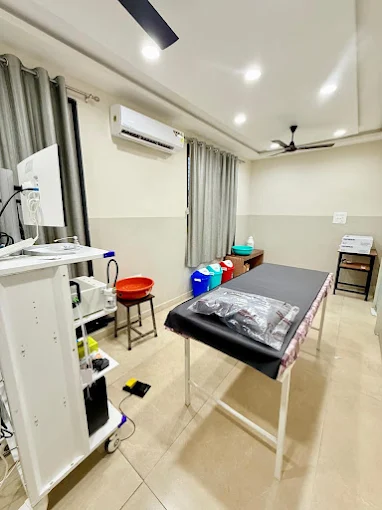
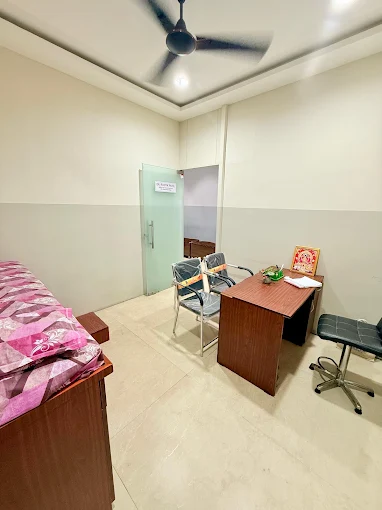
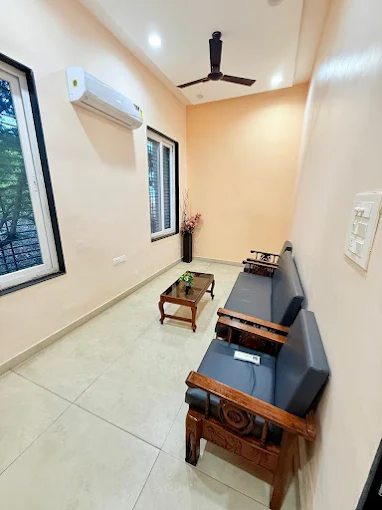
A space built for calm, Precision & Privacy
At Dr Patel’s Gastro, Liver and Endoscopy Centre, we provide specialized care for digestive, liver, and gastrointestinal conditions. From accurate diagnosis and medical treatment to advanced endoscopic procedures, Dr. Rootik Patel focuses on providing personalized care based on each patient’s symptoms and health needs.
Qualifications
- M.B.B.S.
- M.D. (Medicine),
- D.M. Gastroenterology
- Specialized Gastroenterology Care
- Qualified Gastroenterology Specialist
- Personalized Treatment Approach
- Focus on Long-Term Digestive Health
- Comprehensive Digestive & Liver Care
- Advanced Endoscopy Services
- Clear & Patient-Friendly Guidance
- Comfortable Patient Experience
Areas We Serve
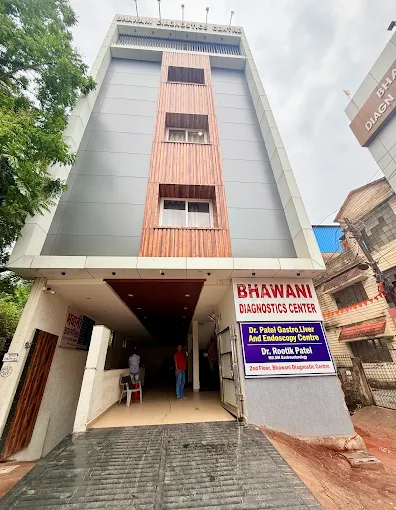
Address: Dr. Patel Gastro, Liver & Endoscopy Centre 2nd Floor , Bhawani Diagnostic Centre, Fafadih, Chowk, Raipur Rd, Raipur, Chhattisgarh 492001
Visit Our Clinic
Address: Dr. Patel Gastro, Liver & Endoscopy Centre 2nd Floor , Bhawani Diagnostic Centre, Fafadih, Chowk, Raipur Rd, Raipur, Chhattisgarh 492001
Phone: +91 62611 46572
Hours: Monday – Saturday – 4:30–7:30 pm
Google Maps: View Location
Frequently asked questions
1. What is Inflammatory Bowel Disease?
Inflammatory Bowel Disease, or IBD, is a group of long-term conditions that cause inflammation in the digestive tract. The two main types are Crohn’s disease and Ulcerative Colitis.
2. Why would I need Inflammatory Bowel Disease Management in Raipur?
You may need evaluation if you have repeated diarrhoea, blood in the stool, ongoing abdominal pain, unexplained weight loss, or other persistent bowel symptoms. A gastroenterologist can determine whether these symptoms may be related to IBD or another condition.
3. What is the difference between Crohn’s disease and Ulcerative Colitis?
Crohn’s disease can affect different parts of the digestive tract, while Ulcerative Colitis mainly affects the inner lining of the large intestine and rectum.
4. Is Inflammatory Bowel Disease curable?
IBD is a chronic condition. Treatment focuses on controlling inflammation, reducing symptoms, preventing flares, and maintaining remission.
5. How is IBD diagnosed?
Doctors may use blood tests, stool tests, endoscopy, biopsy, and imaging tests to diagnose IBD and understand the location and severity of inflammation.
6. Can IBD cause blood in the stool?
Yes. Blood in the stool or rectal bleeding can occur, particularly with Ulcerative Colitis, although bleeding can have many other causes and should be medically evaluated.
7. What is an IBD flare?
An IBD flare is a period when symptoms become active or worse after a period of improvement. Symptoms may include diarrhoea, abdominal pain, bleeding, and tiredness.
8. Can diet cure Inflammatory Bowel Disease?
Diet alone does not cure IBD. However, a balanced diet and individualized dietary guidance can help support nutrition and may help manage certain symptoms.
9. Can Crohn’s disease and Ulcerative Colitis be treated with medicines?
Yes. Medicines are commonly used to reduce inflammation and help achieve or maintain remission. The medicine depends on the type and severity of IBD.
10. Who should I consult for Inflammatory Bowel Disease Management in Raipur?
You can consult Dr. Rootik Patel, M.B.B.S., M.D. (Medicine), D.M. Gastroenterology, at Dr Patel’s Gastro, Liver & Endoscopy Centre for evaluation and management of digestive conditions including suspected or diagnosed IBD.